Energy is one of the largest non-personnel costs at most schools. Going solar can permanently flip that math, and turn the rooftop into a real-world STEM teaching tool. Most schools can't afford solar's upfront cost, but recoverable grants and the IRA's direct-pay provision make zero-down or near-zero-down solar realistic for charter and nonprofit schools. Mid-size schools save $30,000 to $100,000 over the system lifetime, often enough to fund a teacher salary or expand programs.
Why schools have unusually strong solar economics
Schools combine four factors that make solar pay back fast:
- High energy use during peak sun hours. School days run 7am-6pm, exactly when solar produces most.
- Long-term site control. Charter schools and 501(c)(3) schools usually own their buildings or hold long leases.
- Stable demand. Energy use is predictable across school years.
- Visible mission alignment. Solar demonstrates fiscal responsibility (boards) and environmental commitment (parents/donors).
Three financing paths schools should consider
Path 1, Recoverable grant (RE-volv's model)
RE-volv covers the upfront cost. Your school pays a fixed monthly amount typically lower than your current utility bill. Funds are recovered over time and revolve to the next school. Best for schools that don't have capital reserves.
Path 2, Direct ownership with IRA direct pay
If your school has reserves, foundation funding, or capital campaign capacity to buy the system outright, the Inflation Reduction Act's direct-pay provision recovers 30% of the cost as a check from the IRS. Maximum long-term savings, you own everything.
Path 3, Mission-aligned loans
CDFIs and green banks offer 15-20 year solar loans designed for nonprofits. Lower upfront than direct ownership; more capital flexibility than recoverable grants.
Solar as a STEM curriculum asset
Beyond the savings, school solar installations are real-world teaching tools. Most modern systems include public-facing energy dashboards that:
- Track real-time and historical energy production
- Show weather impact on production
- Calculate environmental impact (CO₂ avoided, equivalent trees planted)
- Connect to APIs for student data analysis projects
Many partner schools build curriculum units around the rooftop, especially in physics, environmental science, civics, and statistics. The dashboard data alone supports semester-long projects.
The application process for schools
- Apply, 5-minute application from your principal, ED, or business manager.
- Eligibility, We confirm 501(c)(3) status (or charter status), building/site control, and basic feasibility.
- Free assessment, Solar engineer reviews your campus. Free.
- Board approval, We provide one-page summaries tailored to school boards.
- Installation, Most schools install during summer break to avoid disruption. 3-6 months total.
- Operation, Bills drop. STEM curriculum updates. 25+ years of clean energy.
Common school-specific concerns
"Our roof isn't great", replace it together
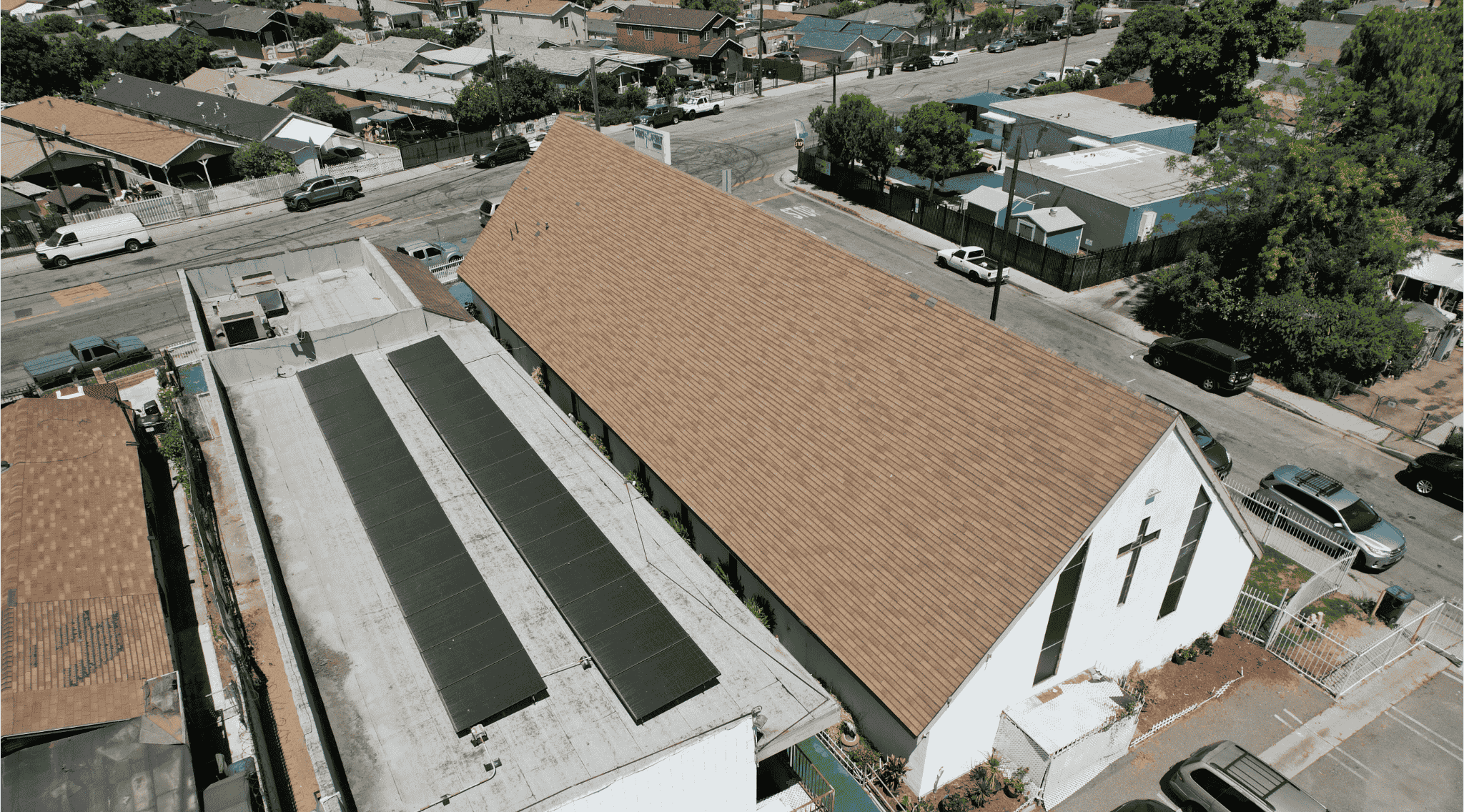
If your roof is within 5 years of replacement, replace it before or simultaneously with solar. Solar protects the roof beneath it, often extending lifespan by 5-10 years.
"We have a complex governance structure"
Charter schools, networks, and cooperative orgs sometimes need multiple board approvals. We provide documentation for parent boards, network sponsors, and authorizers as needed.
"What about ground-mount on athletic fields?"
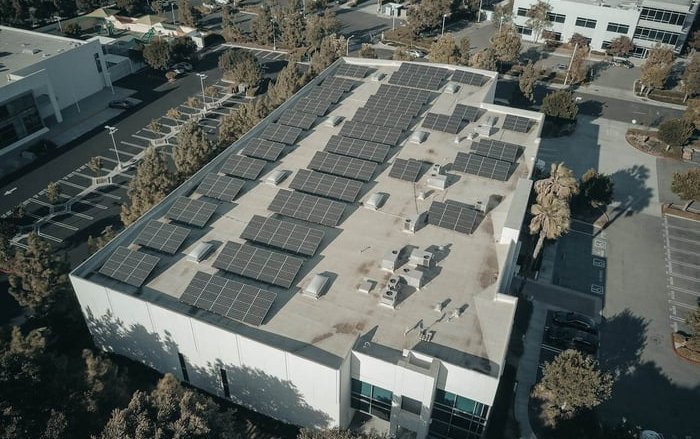
Ground-mount and parking canopy systems are increasingly common. Canopies provide both energy generation AND shade for parking lots, popular with families and faculty.
"Will solar work in our climate?"
Yes, every state. Even cloudy climates produce 70-85% of southern-state output. Cold temperatures actually improve panel efficiency. The major variable is local utility rates.
Real-world school savings (estimated by size)
| School Size | Typical System | Annual Savings | Lifetime Savings |
|---|---|---|---|
| Small (≤200 students) | 30-60 kW | $8K-$20K | $200K-$500K |
| Mid-size (200-600) | 75-150 kW | $20K-$50K | $500K-$1.2M |
| Large (600+ students) | 200+ kW | $50K-$120K+ | $1.2M-$3M+ |
Lifetime estimates use 25-year system life and typical regional utility rates. Actual savings depend on your specific building and rates.
Ready to bring solar to your school?
Start with a free assessment. See the program details for schools → or apply directly →.
Want more solar insights for nonprofits?
Get the latest updates on solar projects, community impact, and how you can help. No spam.