
Across the United States, the overhead cost of keeping the lights on has moved from a routine line item to a roadblock for nonprofits’ community-serving missions. In 2025 alone, small organization and other non-residential electricity costs jumped by an average of 6.4%. For nonprofits, where every dollar spent on a utility bill is a dollar taken from a food pantry or a classroom, these spikes are a direct threat to community impact, and in some cases, organizational survival. This Solar Education Week, we are highlighting how nonprofit leaders who went solar with RE-volv are meeting this adversity with resourcefulness. These organizations are proving that the transition to clean energy is a necessary safeguard against volatile utility markets.
Stable Energy in Unstable Times
For Pastor Julia Brown of Solomon’s United Church of Christ (UCC), the math of solar was transformative. Before partnering with RE-volv in 2024, the church faced monthly bills of around $300. Today, those costs have dropped to less than $100, hitting lows of just $14.

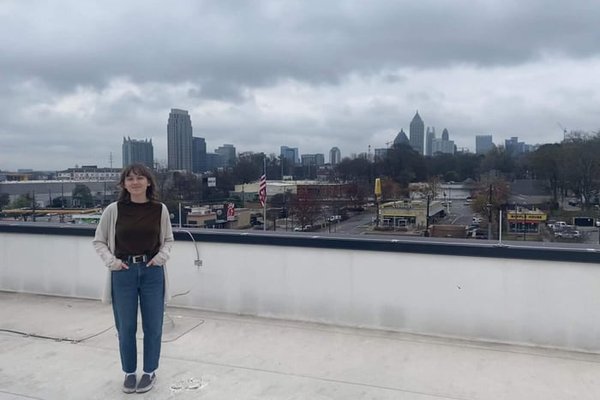
Pastor Julia and RE-volv’s Sarah Bernal celebrating clean energy leadership at Solomon’s UCC (December 2024).
"Our solar panels have relieved us of any worry regarding increased electricity costs," says Pastor Brown. "We are confident that our budget will not be strained by that operational cost.”
Financial predictability is only one side of the coin. The increasing frequency and severity of extreme weather has prompted more nonprofits to seek RE-volv’s expertise in community resilience. At the Occidental Arts & Ecology Center (OAEC) in Sonoma County, California, solar is about survival during climate-driven emergencies.

A battery storage system is lowered into place at the 80-acre OAEC farm to ensure power stays on during grid outages (Fall 2024).
“Solar power and battery microgrid systems are the best answer to how we can create our own electricity at OAEC,” shared Dave Henson, OAEC’s Executive Director, regarding the need for resilient infrastructure to manage multi-day grid outages.
Breaking Through Barriers
Historically, the primary barrier to entry for nonprofits was an inability to access the tax credits available to private corporations. Today, Elective Pay and zero-down financing models have levelled the playing field, yet the complexity of these programs can still feel prohibitive.
This was the reality for Taletha Washburn, Executive Director of Plumas Charter School, whose search for incentives originally led to "complete dead ends.” The search ended in 2023 when RE-volv introduced a zero-down financing model tailored to the school's budget. A Power Purchase Agreement (PPA) lowered financial barriers for Plumas and jump-started their savings from day one, saving the school $10,000 in energy costs annually.
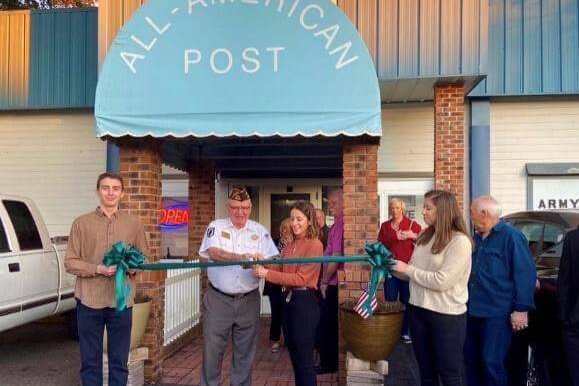
Taletha Washburn, Executive Director of Plumas Charter School, cuts the ribbon on a new 55 kW solar system, a project made possible through a partnership between RE-volv and GRID Alternatives (Fall 2023).
Beyond financing, the logistical thought of navigating a construction project without a roadmap can feel overwhelming. RE-volv and our networks of solar installers have simplified the process to ensure it works within a nonprofit’s busy schedule. At the Zen Center of Denver, Manager Judy Johansen expected weeks of construction. In reality, the process was remarkably efficient. "When I heard the project would be installed in a single day, I was really surprised," Johansen notes. "And then the day came, and I got to watch the whole thing.”
Building Community Through Solar
The true metric of success is measured by community impact. By cutting overhead costs, Solomon’s UCC has doubled down on its Power Pack Program, which provides weekend meals for local students. Beyond that, their church garden, supported by the financial breathing room solar provides, has donated 363 pounds of produce to local food pantries over the last two years. These results serve as a tangible reminder that when a nonprofit saves on energy, the entire neighborhood benefits.
Engagement Opportunities
Attend SF Climate Week
Join the conversation in person to learn how your organization can achieve similar results! Alongside Trinity St. Peter’s Episcopal Church and California Interfaith Power & Light (CIPL), RE-volv is hosting a solar ribbon cutting on Sunday, April 19 at 12:30 PM.
Partner With Us
If you are a nonprofit leader looking to transition to solar, or a potential partner interested in scaling this critical work, contact us at [email protected].